History

It is a long established fact that a reader will be distracted by the readable content of a page when looking at its layout. The point of using Lorem Ipsum is that it has a more-or-less normal distribution of letters, as opposed to using ‘Content here, content here’, making it look like readable English. Many desktop publishing packages and web page editors now use Lorem Ipsum as their default model text, and a search for ‘lorem ipsum’ will uncover many web sites still in their infancy. Various versions have evolved over the years, sometimes by accident, sometimes on purpose (injected humour and the like).

early Christianity in Pompeii
Christianity in Pompeii

Echoes of Faith: Was Early Christianity in Pompeii Real?

Introduction The sudden destruction of Pompeii in 79 CE has preserved not only buildings and artifacts, but also debates that continue to smolder centuries later. Among them is a provocative question: was early Christianity in Pompeii already a reality before

Read More »
houses in Pompeii
Buildings

Behind the Walls: Exploring the Houses in Pompeii

Introduction The houses in Pompeii were not just shelters—they were status symbols, centers of family life, and architectural reflections of Roman identity. Preserved in astonishing detail beneath volcanic ash, these residences open a rare window into ancient domestic life. From

Read More »
entertainment in Pompeii
Buildings

Curtain and Combat: Theatres and Entertainment in Pompeii

Introduction Laughter, music, and bloodshed—entertainment in Pompeii was as varied as it was vital. Far from being mere diversions, public performances and spectacles shaped the city’s cultural identity and social fabric. Whether through theatrical productions or gladiatorial games, the people

Read More »
temples in Pompeii
Buildings

Sacred Stones: Exploring the Temples in Pompeii

Introduction In ancient Pompeii, religion was not confined to silent prayers or grand ceremonies—it pulsed through every corner of the city. From majestic temples in the forum to humble shrines at street corners, the sacred and the civic coexisted in

Read More »
street life in Pompeii
Daily Life in Ancient Pompeii

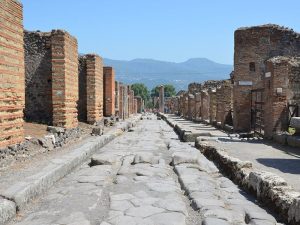
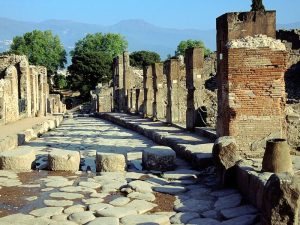
Walking the Streets: Street life in Pompeii

Introduction Few places in the ancient world offer such a vivid window into daily life as the streets of Pompeii. Buried under volcanic ash in 79 CE, the city’s public spaces remain remarkably intact, preserving the sounds, sights, and st

Read More »
urban layout of Pompeii
History

The Urban Layout of Pompeii

Introduction The urban layout of Pompeii offers one of the most detailed glimpses into Roman urbanism ever unearthed. Preserved beneath layers of volcanic ash since 79 CE, Pompeii presents a rare archaeological record of how ancient people designed, defended, and

Read More »