
Christian Households in Pompeii: Faith Behind Closed Doors
Table of Contents
Introduction
When we imagine ancient Christianity, we often think of catacombs, basilicas, or martyrdoms. But the reality in Pompeii may have looked very different. The Christian households in Pompeii were neither grand nor openly defiant; they were modest, quiet, and often hidden.
Through subtle signs, like wall markings or adapted shrines, we begin to glimpse how Jesus-devotion may have existed within the domestic sphere—intertwined with social structures, economic roles, and competing belief systems. These households challenge us to think of early Christianity not as monumental, but as deeply personal.
Households as Spaces of Mixed Devotion

In a city as religiously diverse as Pompeii, homes often reflected a blend of traditions. A family might worship household gods in a lararium, venerate Roman deities at street altars, and perhaps harbor interest in foreign cults or philosophical teachings.
Within this fluid environment, it is possible that some residents—perhaps a slave or tenant—held personal devotion to Jesus. One example comes from a dwelling where the religious symbolism of the owners coexisted with signs of potential Christian worship.
Scholars note that the same house might shelter both traditional Roman piety and early Jesus-devotion, depending on who lived there and what role they held in the household. Christian households in Pompeii were not doctrinally pure spaces—they were adaptive, fragmented, and reflective of broader cultural pluralism.
Slavery, Status, and Worship
For many, faith began under constraint. Enslaved persons were expected to conform to the religious life of their masters, making exclusive Christian devotion difficult. As Longenecker notes, “there is no way a slave could have maintained exclusive devotion to Jesus” without risking social conflict or punishment. Yet this did not mean they had no faith at all.
Some, like the bronze-worker Meges, may have practiced silent or coded expressions of belief—perhaps in private moments, or in minor architectural choices like engraved symbols.
These traces are difficult to identify with certainty, but they remind us that Christian households in Pompeii might have included those who believed quietly while living within power structures they could not challenge.
Independent Christian Residences
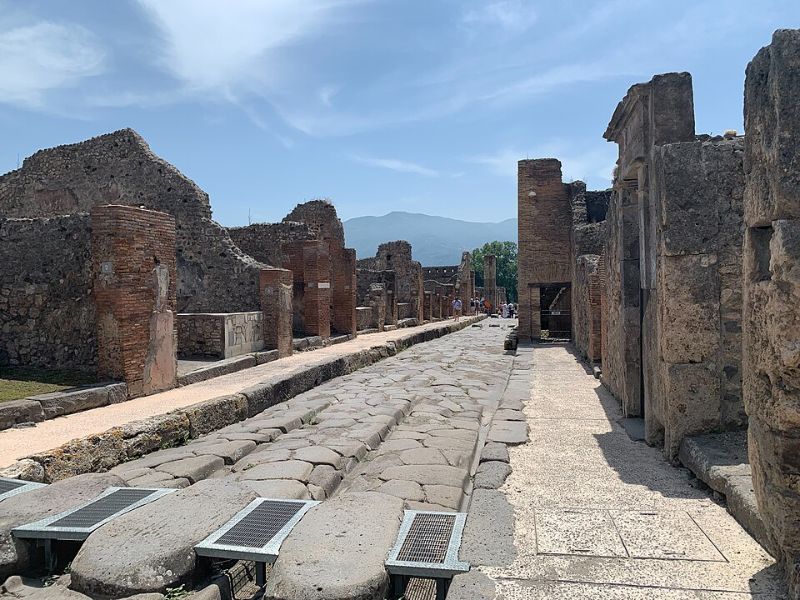
There is also evidence that some homes may have functioned as centers for Jesus-devotion, free from the constraints of non-Christian oversight. One candidate is the modest house labeled 6.17.22, situated near a series of cross-shaped markings on Via Stabiana.
This residence, while small, could have housed a group of Jesus-followers who gathered there for teaching, prayer, or communal meals. Its discreet location and simple layout fit the known characteristics of early Christian gatherings—unadorned, domestic, and close-knit.
In such spaces, Christian households in Pompeii may have served as both home and haven, enabling a small faith community to exist under the radar of religious orthodoxy.
The Role of the Lararium
Nearly every Roman home included a lararium, a shrine to household gods placed in kitchens, courtyards, or vestibules. For those who converted to Christianity—or leaned toward Jesus-devotion—these shrines presented a challenge. Some may have stopped using them without removing them.
A case mentioned by Longenecker describes a convert named Gaius who, after baptism, no longer maintained the family shrine, but chose not to destroy it either. This coexistence highlights the pragmatism of early believers.
The Christian households in Pompeii were not temples of orthodoxy—they were spaces negotiated between public appearance, personal transformation, and cultural expectation.
Secrecy and Devotional Markers
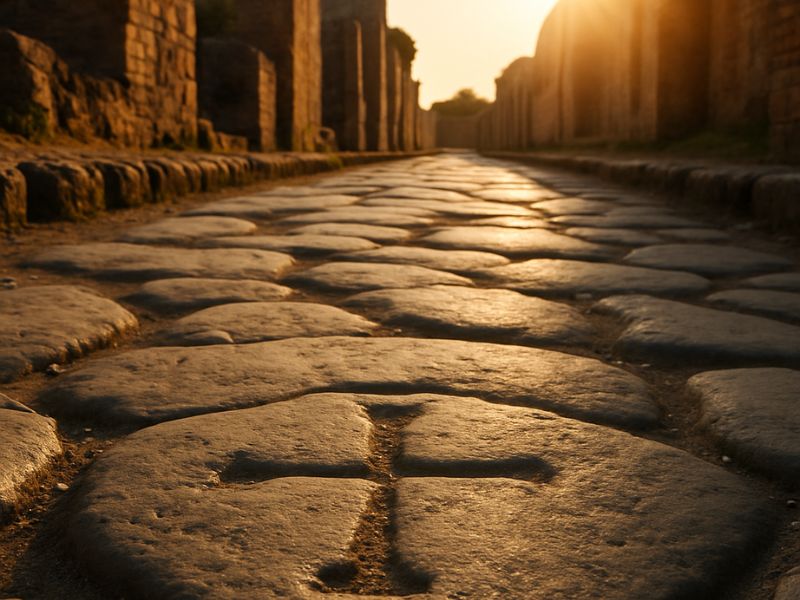
Given the absence of public churches or institutional structures, early Jesus-devotion often relied on coded symbols or strategic concealment. In several Pompeian homes, faint cross-shaped etchings have been found near doorways, possibly functioning as protective symbols or declarations of faith.
Other signs include brief inscriptions like “vivit” (“He lives”), suggesting a resurrection motif. These subtle marks, though easy to overlook, may represent one of the few ways early Christians could visually claim space. Within Christian households in Pompeii, devotion was present—but whispered, not shouted.
Conclusion
The Christian households in Pompeii offer us a different picture of faith—one that lived behind closed doors, beside Roman gods, under the eyes of masters and neighbors. It was quiet but persistent, expressed through minor acts, selective silence, and communal intimacy.
In a world of many gods and little tolerance for difference, early Christians in Pompeii did not build churches—they inhabited homes, and in doing so, began shaping a faith that would one day reshape the world.