
Hellenistic Culture at Pompeii: Temples, Altars, and the Greek Spirit in an Italian City
Table of Contents
When Pompeii Spoke Greek
Before Rome stamped its authority across Campania, Pompeii was already alive with voices, rituals, and art that reached back to Greece. Traders from the east, artisans from Sicily, Oscan-speaking locals — all left their mark. Out of this mix grew what we now call Hellenistic culture at Pompeii, a blend of Italic traditions and Greek spirit.
Walk through its ruins today and you can still feel it. Shrines to gods of spring and love, temples to wine and revelry, architectural echoes of Athens and Syracuse. Though politics would shift to Rome, the cultural heart of Pompeii pulsed to rhythms set centuries earlier in the Greek world.
Altars as Silent Witnesses
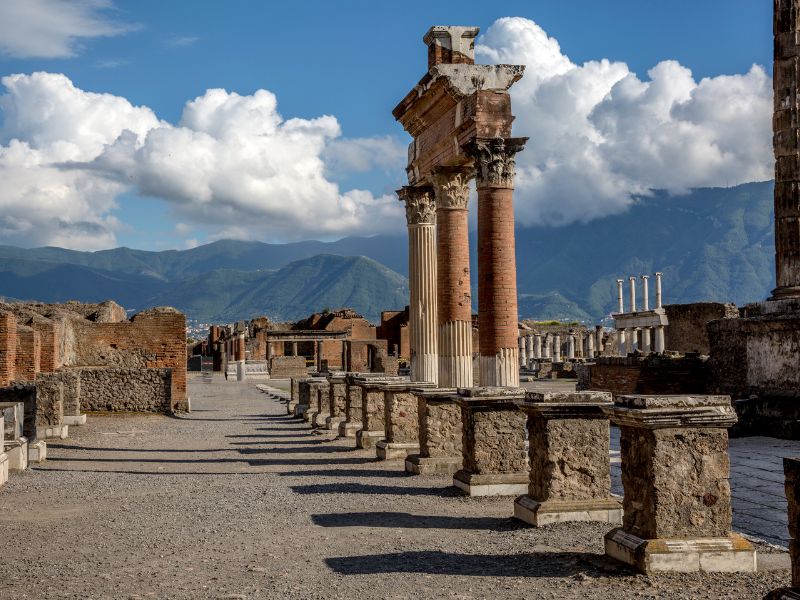
The Altar to Flora in the House of the Faun
In the grand House of the Faun — famous for mosaics like the Alexander Battle — archaeologists uncovered something quieter: a small travertine altar dedicated to Flora. The Oscan inscription reads simply, “To Flora.”
Flora, goddess of flowers and spring, mirrored the Greek Chloris. A bronze statuette may once have stood nearby, making the domestic atrium a sacred corner. Here, in a wealthy home, daily life and faith overlapped. And behind the Roman name of Flora whispered a Greek story.
The Altar to Venus Erycina at Herculaneum
Across the bay, in Herculaneum, another altar speaks of the same blend. Carved from limestone, it bore Oscan inscriptions naming Venus Erycina, a goddess whose cult came from Sicily. She was worshipped for love, fertility, and maritime safety — all vital in coastal towns.
The dedication came from L. Stlabius, chief magistrate, proving that civic leaders didn’t just tolerate Hellenistic traditions. They promoted them, weaving them into public life.
A Sanctuary for Dionysus
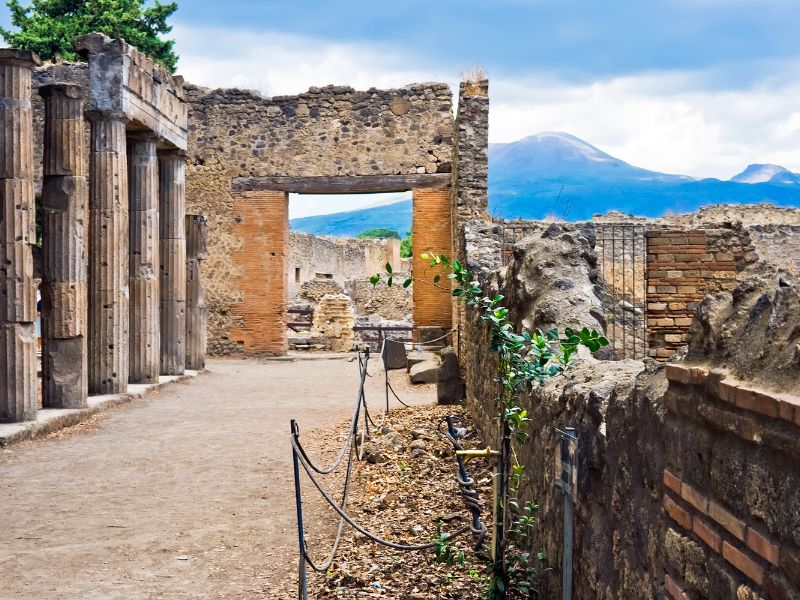
Step outside Pompeii’s walls, southeast of the amphitheatre, and you come to the remains of a sanctuary to Dionysus. Found during World War II, the site revealed a Doric temple whose pediment brimmed with imagery: Dionysus crowned with grapes, a panther prowling at his side, and a veiled woman — perhaps Ariadne, perhaps Aphrodite.
What makes this striking is the political backdrop. In 186 BC, the Roman Senate had banned Bacchic cults across Italy, fearing their secret rites. And yet Pompeii’s sanctuary shows no sign of closure. Was the worship quiet and discreet? Or was it bold defiance? Either way, it tells us that Hellenistic culture at Pompeii was no shallow fashion. It was rooted, resilient, and tied to local identity.
Inscriptions show magistrates overseeing the sanctuary’s upkeep. That meant official support, not just private devotion. For leaders, Dionysus was more than a god — he was cultural capital, linking Pompeii to Greek allies and trade partners.
How Greek Traditions Shaped Pompeii
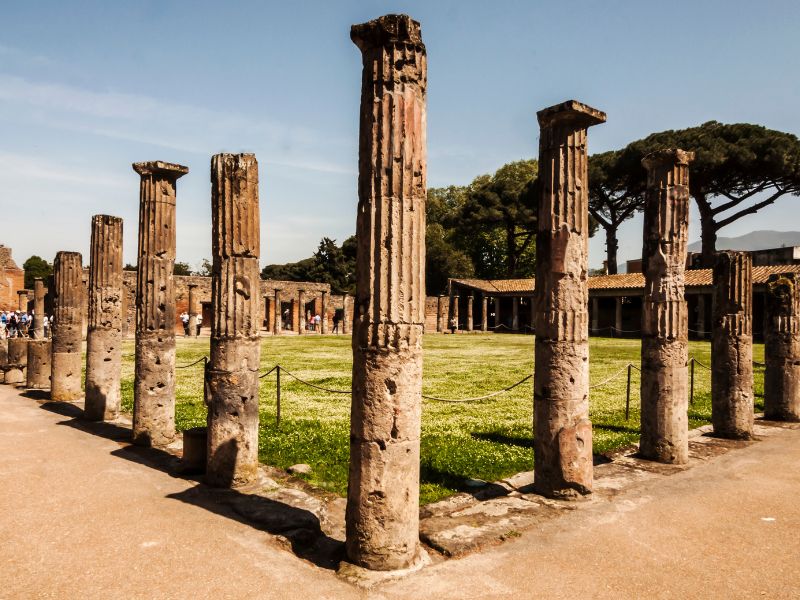
The gods worshipped in Pompeii reveal how deep the fusion ran. Flora’s blessings of spring, Venus Erycina’s protection, Dionysus’s intoxicating rites — together they shaped a city where religion was a shared cultural language.
Greek myths colored the walls of houses, guided temple design, and infused local festivals. In the marketplace, in the palaestra, in shrines both public and private, the Hellenistic spirit echoed. It gave Pompeii a cosmopolitan air rare for a town of its size.
The Greek Soul Beneath the Ashes
Even under Vesuvius’s ash, the Greek voice can still be heard. The altar to Flora in a domestic atrium, the inscription to Venus Erycina, the sanctuary of Dionysus standing firm despite Roman bans — all remind us that Hellenistic culture at Pompeii was more than imported taste. It was identity.
For visitors today, walking the ruins is not only walking in a Roman colony. It is stepping into a place where Greek traditions lived on Italian soil, blending into the fabric of daily life. Pompeii became Roman, yes, but it never stopped speaking Greek in its temples, altars, and sacred spaces.